ABOUT THIS BLOG: OBJECTIVES AND GUIDELINES

What's my group?

Showing posts with label Group 6. Show all posts

Monday, May 30, 2016

Group 6

REMEMBER: every time you make a post, be sure to choose the label "Group 6" so that your post ends up in the proper place. If you don't do this, your post won't appear in your group and you won't get credit for it.
Also: if you put a link in your posting: highlight it to select it, then click on the "link" tool on the toolbar. (Click image below to enlarge).


For links in comments: enter the following HTML code into the comment box: 
<a href="www.google.com">Home</a> 
Change "www.google.com" to whatever website you want to link to. Change "Home" to whatever text you want to display as the link.

Wednesday, May 4, 2016

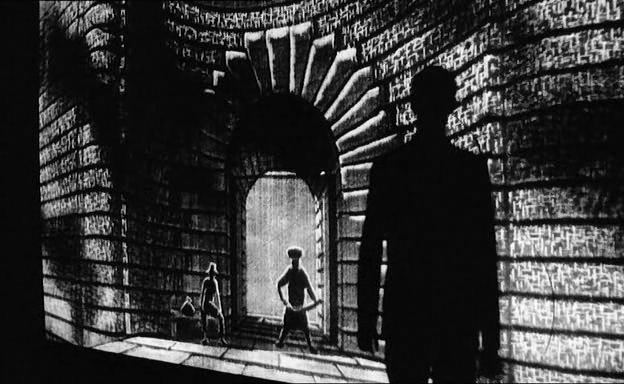
Thoughts On An Imperial Message

On the first look, this parable seems to be referring to the mechanics of a huge empire. The regular people are referred to as “insignificant shadows.” They get so little attention and have so little impact that Kafka does not even use something materially present in this definiton but a shadow, merely a darker spot that never draws the eye to it. In this machine, it is impossible to reach out to every individual, to speak to them and hear them speak back and let each voice be heard because there are too many obstacles and steps in between. The powerful man who is trying to reach out to the undistinguished citizen extinguishes his time and strength on overcoming these hurdles without success, while the citizen remains at the same far away spot dreaming about being reached out to. This is mainly an issue of communication. The parable might also be referring to the issue of understading. It is hard for the powerful and rich to understand the ordinary and poor when their worlds are as remote and distanced from each other as mentioned in the parable: separated by great halls and chambers, shiny staircases, courtyards and outer palaces. The emperor is so secluded from his subjects, it has become much harder for him to acknowledge them and to recognize and address their problems.

We can also interpret the parable to have an epistemological theme. In this sense, the humble subject would be any human and the message would be ‘the absolute truth.’ Every human ‘dreams to himself’ about hearing this message. In other words, every man cares about the truth as it helps them find meaning in life and it is also one of the most important questions for humankind. Similarly in the parable, this message is clearly incredibly important: The dying wish of the most powerful man in the empire is for this message to be delivered and he even double checks whether the messenger understood it correctly. But the message never reaches the subject in the parable – the man never really obtains ‘the absolute truth’ – because of all the obstacles in the way. The material obstacles (chambers, gates, palaces) between the subject and the message, in the context of absolute truth, might be interpreted as man’s unreliable perception of reality. So the parable tells us that the man will never know anything for certain because cannot trust the knowledge he gains through his senses, his mind or anything else.

Tuesday, May 3, 2016

SECOND ESSAY ASSIGNMENT- DESCARTES

According to Hegel “the thought of modern philosophy begins” with Descartes. This notion true because Descartes was the very first person who shakes the Scholastic Aristotelianism. Up until then, everyone were sure about the science and its findings. Descartes, as he widely explains in his book Discourse On Method, somehow proves the perception of certainty by doubting everything. Hegel continues his thoughts and he adds that Descartes is a “decisive step in the self-consciousness of philosophy”. This argument and saying of self-consciousness is the best explanation of Descartes’s method according to me. Since he first began with doubting everything, the one and only thing he couldn’t doubt was his own existence, and this arises the term self-consciousness. The fact that being aware of your existence with all your mind means you know your conscious has exist and well-working. 
Before Descartes, the conception of mind, of knowledge and of science was very different. There was no distinction between “What I perceive and what is “out there””. Actually, Descartes was also educated with this perceptions of science and mind until some age, however, this was not satisfactory for him and he knew that something is wrong. Based on these one can conclude that Descartes have changed the view of philosophy inevitably and framed the question of modern philosophy by make a distinction between the perception of I and what is out there. Out there reflects the notion that the real world, like the trees, buildings, the sun… everything around us. He asserted that sensing , imagination and willing are not linked to the world .Contrary to Aristo, because the Aristotelian idea had suggested that the sensing, imagination and willing were simply mental properties.
In part 4, Discourse on Method, Descartes also suggests that, one can doubt everything except his own self and God. The reason that he perceived God as a perfect mind and perfect being, unlike his being or the world around him. So, doubting method couldn’t work on God because something perfect cannot be depended on something as imperfect being. 

To conclude Hegel’s lectures on history of philosophy while examining the thoughts of Descartes, he says “its own conditions of possibility”, which means Descartes had a futuristic mind and he developed these ideas regardless of the obstacles at that time with no help but by his own enthusiasm. Of course these ideas have also developed by the time but Descartes consciously or without knowing that he would create the term of modern philosophy ,helped the philosophy moving forward a lot. 

THIRD SHORT ESSAY-KAFKA'S PARABLE

In this short parable we can see that Kafka is telling a story by indicating law and authority. As one can clearly see that this story have some confusions in itself. A man who wants to reach the Law and thinks that everyone should also be able to have access to the Law. However there is an obstacle which Kafka called “the doorkeeper”. 
Like the other short parables of Kafka this one is also disturbs me in some ways. They are stories that at the very first look seems very normal and okay but when one starts to think about it, it becomes suddenly non-sense. For instance, when the man wants to be admitted to the Law, the doorkeeper’s response is “it is possible, but now” (3). So, the question occurs what the right will be then. However, the problem with the story there would be no accurate time for entrance. This may show that as people, we, want to achieve something but never had it in real terms but we never give up trying like the man in the story. Kafka may want to show us that the path is better than the outcome. What I mean is, failure only can be possible if we don’t put the necessary effort on our goals. Because if one is doing his best, then what else can he do about it. The answer is nothing. 
Second disturbing thing about the story is, although the doorkeeper says he/she cannot allow him to go, at the same time, he never actually stops the man. So, if the man tried, he might reach to the Law. Why he never attempts to go inside then? This maybe because the man appreciates the power of the authority and he believes the doorkeeper’s words. The man actually believes that one day he may be accepted. But the time goes by and he gets older and he dies. 
The end of the story makes me think that one day I may die without achieving the one sole thing that I have looked for. This proves that how reality works. People actually die and they sometimes may not be successful.  
 So, the above interpretations are related to the law and authority and how it reflects the real life. But this story could be integrated to another aspect as well. Such as I might be the man and the doorkeeper may reflect the whole societal norms because it has a power on me. I want to reach the Law, the equality where my opinions are appreciated. But the tabus of the society i live in doesn't allow me to reach the pure right and I sacrifice all my life to accomplish this. I always try and always get the same old result, the refusal. However, I would never see myself as a failure because I did all my best and dying for a reason will calm my doubts. 

Thirdly, the very least sentences of the story, when the doorkeeper says, “since now you are dying, I will close this door, because this was only for you”. This argument makes me think that when people die there is nothing left to think about, you die with the whole world because the world is in you and you are the world. When your consciousness dies, no one or nothing could alter anything about you, society, the world, the norms… etc 

Before the Law by Kafka: Interpretation


 'Before the Law' is a paradoxical parable by Kafka, published in 1915. It presents the story of a man who is trying to get through a gateway to seek knowledge and access the law. However, the gatekeeper doesn't permit him to get in, though he tells the Man that he can try to enter but warns him that there are more gatekeepers inside. Eventually the man becomes old and dies without ever gaining entrance. Even though this parable is written in a simple language and takes up only one printed page, it is difficult to understand the meaning behind it; it can be interpreted in many different ways, including a psychological and political perspective.

The initial interpretation that I came up with, is the idea of "Dreams." All individuals have different dreams and desires, the gateway signifies the pathway of the man's personal dream. While the gatekeepers symbolize the challenges and obstacles that the man has to face to reach his goal. The first gatekeeper says to the Man in the end "since this gate was made only for you, I am now going to shut it." This is because different people have different dreams and this gateway act for the Man's dream. Since he never got past the first step, nor moved away from his challenge, he never achieved his dream. The obstacles created by the gatekeepers can be presented from the people around the Man (society) who are doubting his abilities and telling him that he can't do it. On the other hand, they can represent inner demons related to mental issues such as depression and anxiety. The moral of the interpretation above is that; we all have one life to live and each person must follow their dreams and aspirations. Life is about taking risks and getting out of your comfort zone. Diving into the unknown even if failure is a possibility. As it is better to take the risk of challenging the gatekeepers than to die before the door is sealed and regret it.

Secondly, from a political/social perspective, the parable can viewed as a way of fighting for human rights against an authority such as the government. People should be willing to fight or stand up for their civil rights to achieve justice. It is also similar to the notion of enlightenment as described by Kant. The gatekeepers represent the "guardians", as they aim to control the citizens by imposing their laws and beliefs on them. The man has to the option of disobeying the gatekeeper and moving forward. However, by choosing not to, Kant many argue that the Man is a coward and is lazy as he have remained "minor" all his life. Men like him are incapable of challenging the system. They just wait for change to happen or ask for permission to seek it, instead of standing up and freeing themselves. Even though Laws are made to product people -- if they fail to do so, they should be changed. Sometimes breaking laws is necessary for human civilization to progress.


This parable is a great piece of writing, the interpretations above are just some of my attempts to understand the meaning behind its mystery, people can come up with many different ideas and make sense of them.

Saturday, April 23, 2016

Marx on Alienation

"Marx saw the workers as alienated from the product of his labor and from work itself because, since the product belongs to the capitalist, his work is 'forced labor' not his own, but someone else's."(Nahem, 11)

I find this a successful picture in depicting Marx's alienation theory; workers from less economically developed countries (LEDC) are working long hours, to produce products that they cannot afford to buy. These products are shipped to a different country (MEDC), then the citizens purchase these products.


Friday, April 22, 2016

Smith vs. Marx

At the beginning it was hard for me to
understand Smith and Marx especially Smith :) Then I found this video. Talker explains both of their ideas also he adds his idea too :)


If you ask me everyone life now is so unfair for Marx's ideas In a world like this there will always be a leader a rich person using poor people. Even I agree everything he suggests I think it is impossible to follow his ideas in a world like this. There are people who says they follow Marx but then we see them with their Iphones at the Starbucks ;) and it is normal we can't judge them. I feel like Marx's ideas are dreams but Smith's ideas are the reality.

Sunday, April 17, 2016

Adam Smith

This is a significant quote by Adam Smith which means:


Individuals aim to become wealthy (own-interest) by that, they trade their products with others who value what they offer. Therefore, they don’t give people “dinner” for the good of those people/to help them, but because it makes them richer.


Saturday, April 16, 2016

Invisible Hand&Pound

When I was searching for Adam Smith ı saw many articles about his theory called Invisible hand. First I didn't understand it because there were many words that I didn't understand then I found this video and I finally understand :) For understanding Smith and economics you should definetly check this video

https://www.youtube.com/watch?v=ulyVXa-u4wE


Also I learned that Adam Smith took a place at the back of 20 pounds. Many people wasn't please with that. If you want to check out why they didn't want him look at this link :)

http://www.independent.co.uk/news/uk/this-britain/the-big-question-who-was-adam-smith-and-does-he-deserve-to-be-on-our-banknotes-422276.html


Saturday, April 9, 2016

Polanski's Ghost Scene


For me Banquo ghost scene is the most important scene in the book and in the films. It is the first time Macbeth loses his mind so much that he saw his friend's ghost that he murdered. For directing this scene directer has two options.  He won't show the ghost of the Banquo, in addition to this we won't empathy with the character Macbeth and throughout the story we won't find him right. For us he will be a cold blooded killer that doesn't have feelings but if you show all the imaginary things that Macbeth sees like Polanski did, we will have different assumptions about the character. We will understand him and how he feels after he killed Duncan and Banquo which will be more effective for us.

Not only showing the ghost, how you show is important to make it more effective too. In the ghost scene, ghost appears on the chair of Macbeth. For me this is the most effective thing about this scene. In the new version ghost appears in a random place which doesn't have a meaning but appearing on the chair means that Macbeth will never be peaceful and comfortable because of these killings. In the book the scene is like Polanski's version. I think the idea of having this scene exactly like the book was a good effective choice that new movie failed to success.

Lastly if we think more technical this is still impressive. First of all scene is mute which is a great way to show the emotions of Macbeth. He pauses after his every word. That is for to show us how much he is scared and shocked that he can't speak well. In the other version however Macbeth talks fluently even there is a ghost near him. Banquo's ghost is white and bloody, he looks at Macbeth's face madly in the Polanski version, in the new one they show the ghost as normal he wasn't even scary. Making Banquo's ghost scary is better than keeping him normal. Polanski did a great job about this scene and showed us in the most effective way.


Friday, April 8, 2016

Polanksi’s Interpretation of Macbeth

The director Roman Polanski used some cinematic techniques to show his interpretation of the Shakespearean play Macbeth. Despite being an unquestionably dark play, the tone of Polanski's version of Macbeth is certainly influenced by his personal life as it focuses on the pessimistic and violent elements of the play. Nonetheless, he uses creative visual effects to highlight important themes of the play.

Macbeth was the first film that Polanski produced after the murder of his wife, Sharon Tate, by Manson and his team. This incident definitely effected the production of the film as it emphasizes on graphic violence and bloodshed. Although Macbeth is originally a dark, violent play, most of the goriness takes place off-stage. To illustrate, when the murder of Duncan occurs in Act 2 Scene 1, in Polanksi’s film, the camera focuses on the remarkably bloody/gory murder of Duncan with details. Where Duncan wakes up, and Macbeth cuts his throat after stabbing him continually. However, this have been done off-stage in the original play by Shakespeare. In addition, the murder of Macduff's wife and children in Polanksi’s film is nonsensically brutal, which acts as an obvious reference to the Manson murders. The way I see it, using such graphical violence weakened the complexity and ambiguity of Shakespeare's original text.

Furthermore, the ending of Polanksi's film is significantly different from Shakespeare's play. Although the last scene of Shakespeare's Macbeth is not a happily-ever-after and rather tragic, Polanski offers an extremely depressing and a nihilistic ending. In which Donalbain, Malcolm's brother, is shown on his way to consult the Witches. This suggests that Donalbain will follow Macbeth's footsteps. Donalbain may kill King Malcolm in a similar way to Macbeth's murder of King Duncan. Therefore, the desire for fortune and power continues; the cycle will never end. This presents a pessimistic view of the world, which relates to Polanksi’s nihilist beliefs.

Despite the extremely pessimistic and violent approach, this does not deny Polanski's successful use of a creativity in the film. The symbol of "blood" occurs many times in Shakespeare's play. "Here's the smell of the blood still! / All the perfumes of Arabia will not sweeten this little hand." (5.1.45).
Polanski’s uses his interpretation in the form of visual effects to emphasize Shakespeare's "blood" theme. One main symbol is the crown which after murdering Duncan, falls to the ground while layered with blood. This image signifies the fall of the king by evil methods. This also reappears in the ending scene as Macbeth is killed. In addition, the rotation of the crown indicates the turning of time, of a cycle. Moreover, the close up shots taken in the murder scene drew my attention on to the astonished and frightful facial expressions of King Duncan. In this scene, a long camera shot was used at a low angle of the murderous setting which makes the entire scene more prominent.

All in all, Roman Polanski's adaptation of Macbeth displays a pessimistic and violent version of Shakespeare’s original play. Despite this, the film was an interpretive success in terms of creativity as it used symbolism to engage its spectator's attentions.

Friday, April 1, 2016

Descartes-Animals& Did He Really Said That?

Hello everyone :)
When I was searching for Descartes I saw many sites about animal rights and all of them were hating  Descartes. So I decided to search about Descartes and animals and I found this:
According to at least one biography, Renée Descartes was driven to prove that humans had souls and animals didn’t. So, naturally, he threw a cat out of a window to demonstrate its lack of emotion and sensation.
In addition to throwing cats out of windows, he also performed a pre-Pavlov experiment on a dog. He whipped the dog repeatedly while a violin was playing. He discovered that, after a while, the sound of the violin was enough to frighten the dog. He also conducted more gruesome experiments. Once, he cut the end of the heart of a living dog. He jabbed his finger inside the dog to see if it pressed his finger.
It did.
:(
Also there is a really funny thing that I want to share too :)
Again when I was searching for Descartes quotes, I saw this quote. Not only once this quote was everywhere and I was like What ? :) So I decided to search for that one too :)

I learned that in an adult site someone made a comment "Give her the dick" using Descartes as his profile picture. This comment gained so much popularity that people start using Descartes's picture in adult sites and they created a meme where Descartes says such things. 
So if you ever see a quote like this Don't Worry :) He didn't say that.

                                                        
           the comment :)

Thursday, March 31, 2016

DID YOU KNOW?

Most of us seen Math and Geometry in our highschool and colloge educations. We all used the same coordinate system in the most basic to the most complex mathemetical concepts. But did you know that the coordinate system, that we have been using for the last ten years of our lives, was created by Rene Descartes?

Descartes, was not only one of the best philosophers but he was also one of the best mathematicians. This development in geometry provided the first link between the Euclidean geometry and algebra. So not only Descartes conquered the world of philosophy but he also conquered the world of mathematics.

Are You Sleeping?

Descartes doubts everything he sees because he says that everything in life can occur realistically in dreams. We can have the most life-like dreams of being somewhere or doing something and not realize that it’s untrue until we wake up. Our dreams themselves prove that we can be deceived into believing a simulated reality. So how can we ever know that life itself is not a dream?

Well, John Locke has a very well-known argument against this. You probably know it too. Have you ever been so shocked that you pinched your hand to see if you were in a dream? Then you’ve heard of it. He says that the fact that we feel pain means we’re not living in a dream, because you can’t feel pain in dreams the way you feel pain in life. Of course, science has already put this argument to test. It would be nice to say they proved we’re not living in a dream but actually they proved that there have been rare cases where people could feel sharp local pain while dreaming. So you can actually feel pain in dreams! Still, we don’t know if we can feel “agonizing and ongoing pain” in dreams, so Locke might still have a point. But so far we have no way to tell.

Also, naturally there are many other (much less sophisticated and non-philosophical) ways people have suggested to tell dreams apart from reality. Personally I found this one little method very interesting: in the TV show Doctor Who when the characters are locked in a dream, they make up a “dream or reality” test: they each take a copy of the same book, open the same page and read the first word aloud. When they all read a different word, bingo! It means they're dreaming.

Is Life An Illusion?


This is one of my favorite quotes by Descartes, in which he argues that the existence of anything that you reason from your senses, like vision, can be essentially uncertain. Our reality could be a Matrix, or a simulation. We could never be 100% certain about anything. To illustrate, if you're looking at a tree, you don't know if that tree truly exists or if it is something you are creating in your dream. Likewise, if you’re viewing your reflection in a mirror, it doesn't mean that you exist. Therefore, you can always doubt the certainty of everything, BUT, even if life was an illusion, the fact that we question reality, proves that there's something thinking.

Who Descartes really is


This caricature along with it is very funny, it gives me some kinda hope actually about our century. Who knows maybe in this century's geniuses will be found on their blogs :)
I thought since Descartes was a man of thoughts, he should have some interesting facts in his life,he shouldn't be easy, so I checked if there were any found this site, it is very funny, i will share the link but i will also write some of these facts here also.
  • The man who invented analytic geometry, René Descartes (1596-1650), never got out of bed before 11 in the morning! 
  • DesCartes liked dressing up in fancy clothes. 

Friday, March 18, 2016

Machbeth1971-Machbeth 2015

In this blog I've decided to compare the famous Banquet ghost scene in the new version and the version that we are watching now. I have to say that I was quite dissapointed with the new version. I heard so many good things about yet the old version was much better for me. Mostly we can see why the old version is better in the Banquet ghost scene.

In the 1971 version Machbeth is having a dinner and then he says there is nothing to sit. People around the room shows him an empty chair but he sees bloody ghost of Banquet. He starts yelling, everyone gets shock. In the latest one, again Machbeth is having a dinner but no one asks him to sit at somewhere he sees Banquet who looks just like the same when he was living even he is a ghost now, he just gets mad at the people around there.

There are many reasons that the old version is better. First, seeing Banquet's ghost sitting at a chair that Machbeth could have been sit it something symbolic. I think it means that Machbeth will never relax, never have fun because of all the killing that he had done. Second, seeing Banquet covered in blood is a better representation of a ghost also seeing your best friend covered in blood because of you is more effective too. It was hard for me to understand that it was a ghost in the new version and since Banquet wasn't looking like a ghost I can't relate to Machbeth getting scared. Lastly their reactions. In the old version we can see the fear in actors face and how he yells seems like he is yelling to himself, because he was mad at himself since he was the one ordered his death in the new version actor doesn't scare so much and he starts yelling to other people, like he wasn't the actual guilty. Also I found Michael Fassbender's face so serious and so hard to read unlike the Machbeth which has a face like an open book


Ghost Representation 2015-1971

Reactions 2015-1971


Portrayals of the Three Witches

As far as I have seen, there are two different ways that are mainly used to depict the witches in adaptations of Macbeth. Some adaptations (such as in Polanski's movie) choose to portray the witches as elderly women, and other adaptations depict them as beautiful and young women (for example in this painting). So two contrasting methods, age and youth, are used to make the witches look as deceiving as possible and although these two means are starkly different, I would say they are equally effective. When other characters see old people with wrinkles and hunchbacks, they'll assume them to be harmless, normal human beings. Similarly when the witches are young people with pretty faces and kind smiles people will not assume them to be evil supernatural beings in disguise. (It is actually more fitting for a young witch to say the phrase from the play, "foul is fair and fair is foul", as she herself would be both fair and foul.) In the end, there is no one true best portrayal, as both decisions successfully hide the witches out-of-the-ordinary and ominious nature (until they start chanting spells or making gloomy prophecies about your future, of course!).

Macbeth's state of mind


Left handside of the image at the bottom we can see a bottle looks like a medicine however it is excluded from the scene where Macbeth sees Banquo’s ghost. At first i thought this is the painter’s own interpretation of Shakespeare. The interesting thing when i googled the label on the bottle, found that it is actually a commercial of a meat company. I will add a link incase you might wanna take a look at the product itself. 
If we don’t look at the advertising, the image is sufficent to present the situation yet not the best.  Macbeth’s fear and others’ curiosity and worries can be observed well but the ghost itself not much like Banquo. When i look to the ghost, it reminds me Jesus actually because of all halo around him. However in the scene we know that Banquo’s ghost should be more scary  since he were not a saint, he should’nt have been pictured as white i believe. The figure of Lady Macbeth also is not successfully presented because i believe her actions should be exaggerated. Lady Macbeth is the one who tries to save Macbeth by telling the guests they should not engage with Macbeth. In a situation like this, people tend to overreact in terms of gestures. Lady Macbeth, however feels like she is calmer than the usual. 


The whole idea of Macbeth is the one that sees the ghost represents the moral health of the Macbeth and the others as well. Since he scares to be death and wishes to be dead like Duncan and Banquo, we can question his sanity.

https://en.wikipedia.org/wiki/Liebig%27s_Extract_of_Meat_Company

Lady Macbeth performed by Marion Cotillard

Macbeth(2014) directed by Justin Kurzel is a brilliant adaptation of the play. I am amazed by both the technical and artistic sides of the film; starting from the cinematography, music, landscapes to the performances. I’d like to focus on the performance of the Marion Cotillard, who plays Lady Macbeth. Her stunning performance made me perceive Lady Macbeth in a different way than when I watched Polanski's version.


Act V, scene 1:
The scene begins by showing the weather's atmosphere, which is foggy, gloomy and dark. This symbolizes despair and misery. In this act, Lady Macbeth have gone mad and is suffering from psychological disorders. She makes a speech to pour out her emotional pressure, stating “Will these hands ne’er be clean?” which indicates the guilt of murdering King Duncan. “The Thane of Fife had a wife.” referring to lady Macduff that Macbeth have killed as well. Marion Cotillard acted this scene with so much emotion, which made me sympathize with her character.

In addition, even though the play does not mention whether Lady Macbeth had a child, the scene shows a vision of Lady Macbeth talking to her dead child. This adds a new layer of analysis to the play that I never observed before. She does not only regret killing the king, but also the laments on what goodness she has lost, from losing her child to bearing the guilt of killing Macduff's family.


To sum up, I think Marion Cotillard was successful in portraying the character Lady Macbeth as she have performed it in a great way by giving a new depth to the character.